Search engine optimization (SEO) is essential for increasing organic traffic and attracting potential customers to your PrestaShop store. A well-optimized PrestaShop website can improve its visibility in Google and other search engines, helping your products reach more shoppers without relying entirely on paid advertising.
Here are the most important ways to optimize your PrestaShop store for SEO.
1. Optimize Product Titles
Product titles should clearly describe what you are selling and include the primary keyword naturally.
Example:
Instead of:
Premium Product 123
Use:
Men’s Cotton Casual Shirt – Slim Fit Blue
Keep titles descriptive, readable, and relevant to the actual product.
2. Write Unique Product Descriptions
Avoid copying descriptions supplied by manufacturers or other websites. Create unique descriptions that explain:
- Product features
- Benefits
- Materials
- Size or specifications
- Usage instructions
- Important product information
Use relevant keywords naturally rather than repeatedly inserting the same keyword.
3. Optimize Meta Titles and Meta Descriptions
PrestaShop allows you to customize important SEO information for your pages.
A good meta title should:
- Describe the page accurately
- Include the primary keyword
- Be unique
- Encourage users to click
A good meta description should briefly explain what visitors will find on the page and provide a compelling reason to visit.
4. Create SEO-Friendly URLs
Use short, descriptive URLs.
Poor URL:
example.com/product?id=123
Better URL:
example.com/mens-cotton-shirt
Avoid unnecessary parameters, numbers, and complicated URL structures whenever possible.
5. Optimize Product Images
Images are particularly important for ecommerce SEO.
Before uploading an image:
- Use descriptive file names
- Compress the image
- Choose an appropriate format such as WebP where supported
- Add meaningful ALT text
- Avoid unnecessarily large image dimensions
For example:
blue-cotton-shirt.webp
is more useful than:
IMG_4587.webp
6. Improve Website Speed
Page speed affects user experience and can also influence search visibility.
Consider:
- Compressing images
- Using WebP/modern image formats
- Enabling caching
- Reducing unnecessary modules
- Minimizing CSS and JavaScript
- Using a quality hosting provider
- Using a CDN where appropriate
Test your store regularly with Google’s PageSpeed Insights and monitor both mobile and desktop performance.
7. Make Your Store Mobile-Friendly
A large percentage of ecommerce traffic comes from smartphones. Your PrestaShop theme should therefore provide a good experience on:
- Mobile phones
- Tablets
- Laptops
- Desktop computers
Check product pages, menus, checkout pages, buttons, images, and forms on smaller screens.
8. Create an XML Sitemap
An XML sitemap helps search engines discover important pages on your website.
Your sitemap should contain important indexable pages such as:
- Product pages
- Category pages
- CMS pages
Submit the sitemap through Google Search Console and keep it updated as your store changes.
9. Improve Internal Linking
Internal links help search engines understand the structure and relationships between pages.
For example, a blog article about men’s shirts could link to:
Men’s Shirts → Cotton Shirts → Blue Cotton Shirts
You can also link related products and relevant categories together.
10. Optimize Category Pages
Category pages can generate significant organic traffic.
For each important category, create:
- A descriptive category name
- Unique introductory content
- Optimized title and meta description
- SEO-friendly URL
- Relevant internal links
- Useful product filters without creating unnecessary indexable URLs
Avoid having dozens of nearly identical category pages.
11. Use Canonical URLs
Ecommerce websites can generate multiple URLs for the same product because of filters, sorting, combinations, and parameters.
Canonical URLs help search engines identify the preferred version of a page.
Make sure your PrestaShop configuration and SEO modules handle canonical URLs correctly.
12. Fix Duplicate Content
Check your store for duplicate or near-duplicate pages.
Common sources include:
- Product combinations
- URL parameters
- Sorting URLs
- Filter URLs
- Duplicate category paths
- Manufacturer pages
- Pagination
Decide which pages should be indexed and which should be excluded or consolidated.
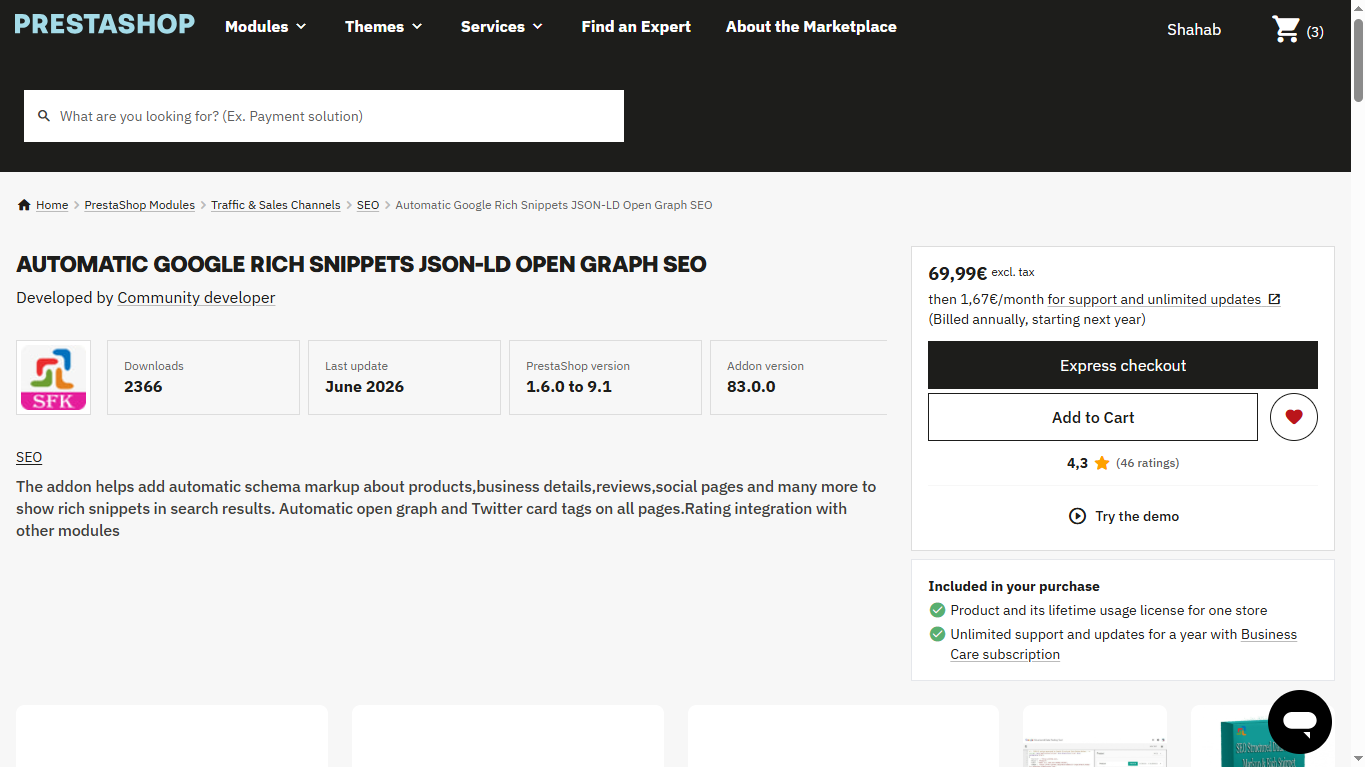
13. Use Structured Data
Structured data can help search engines understand your products.
For ecommerce product pages, relevant structured data can include:
- Product name
- Image
- Brand
- Price
- Currency
- Availability
- SKU
- Reviews and ratings, when eligible
Make sure structured data accurately represents information visible on the page.
14. Create Useful Content
Don’t optimize only product pages. Create useful content around the products you sell.
For example, an electronics store could publish:
- How to choose a laptop
- Laptop buying guide
- Best laptop screen sizes for different uses
- Laptop maintenance tips
- Laptop comparison guides
This can help your store attract visitors earlier in the buying journey.
15. Monitor Google Search Console
Connect your PrestaShop store to Google Search Console and regularly monitor:
- Search queries
- Clicks
- Impressions
- Average position
- Indexed pages
- Core Web Vitals
- Sitemap status
- Crawling/indexing issues
Use the data to identify pages that receive impressions but have low click-through rates or pages that are not being indexed as expected.
16. Build Quality Backlinks
Backlinks from relevant, trustworthy websites can help strengthen your site’s authority.
Focus on earning links through:
- Useful guides
- Original research
- Product resources
- Industry publications
- Digital PR
- Partnerships
- Valuable shareable content
Avoid buying large numbers of low-quality backlinks.
17. Keep PrestaShop Updated
Keep your PrestaShop installation, theme, and modules maintained and updated according to compatibility and security requirements.
Before major updates, create a complete backup and test changes on a staging environment when possible.
PrestaShop SEO Checklist
| SEO Area | What to Check |
|---|---|
| Product titles | Unique and keyword-relevant |
| Product descriptions | Original and useful |
| Meta titles | Unique and descriptive |
| Meta descriptions | Compelling and relevant |
| URLs | Short and readable |
| Images | Compressed + descriptive ALT text |
| Mobile | Responsive design |
| Speed | Fast loading pages |
| Sitemap | Created and submitted |
| Internal links | Relevant links between pages |
| Canonicals | Correct preferred URLs |
| Structured data | Accurate product information |
| Duplicate content | Identified and controlled |
| Content | Helpful SEO articles |
| Backlinks | Relevant, quality links |
| Search Console | Monitored regularly |
Final Thoughts
PrestaShop SEO is not about adding keywords everywhere. The goal is to create a technically sound, fast, mobile-friendly store with unique product content, clear site architecture, useful information, and a good user experience.
By consistently optimizing products, categories, technical SEO, images, speed, internal links, and content, you can build a stronger foundation for long-term organic search traffic.
#Tags
#PrestaShop #PrestaShopSEO #SEO #EcommerceSEO #Ecommerce #SEOOptimization #TechnicalSEO #OnPageSEO #ProductSEO #CategorySEO #GoogleSEO #GoogleSearchConsole #SEOForEcommerce #OnlineStore #DigitalMarketing #OrganicTraffic #WebsiteOptimization #SearchEngineOptimization #EcommerceMarketing #PrestaShopTips