Meta Title: PrestaShop: Complete Guide to the Open-Source eCommerce Platform
Meta Description: Discover how PrestaShop helps businesses build, manage, and grow online stores with powerful eCommerce, SEO, customization, and multi-store features.
URL Slug: prestashop-ecommerce-platform-guide
Primary Keyword: PrestaShop
Secondary Keywords: PrestaShop eCommerce, PrestaShop development, PrestaShop SEO, PrestaShop online store, PrestaShop features, PrestaShop website, PrestaShop modules, PrestaShop themes
What Is PrestaShop?
PrestaShop is an open-source eCommerce platform designed to help businesses create and manage online stores. It provides tools for managing products, categories, customers, orders, payments, shipping, marketing, and store performance.
The PrestaShop project says the platform has powered more than 300,000 web stores worldwide since 2007. It is written in PHP and is designed to be highly customizable, with support for multiple languages, countries, payment services, and responsive storefronts. (PrestaShop)
For businesses looking for greater control over their online store, PrestaShop can be an attractive alternative to hosted eCommerce platforms.
Why Choose PrestaShop for an Online Store?
One of the biggest advantages of PrestaShop is its flexibility. Store owners and developers can customize the platform according to their business requirements.
1. Open-Source eCommerce Platform
PrestaShop is open source, which means businesses can modify and extend the platform rather than being limited to a fixed software environment.
This makes it particularly useful for businesses that require customized functionality or integrations.
2. Powerful Product Management
PrestaShop allows store owners to organize products using categories, combinations, attributes, prices, stock information, images, and other product data.
A well-organized catalog can also help search engines understand the structure of an eCommerce website.
3. SEO-Friendly Features
PrestaShop SEO is an important reason businesses consider the platform.
PrestaShop 9 introduced improvements including cleaner product URLs, better handling of language prefixes, redirects for inactive categories, controls for filtered listing pages, and native WebP and AVIF image support. (PrestaShop)
These features can help create a technically stronger foundation for organic search visibility.
4. Customizable Themes
The appearance of an online store can have a major effect on user experience and conversions.
PrestaShop supports customizable themes, allowing businesses to create storefronts that match their branding and product categories.
PrestaShop 9 also introduced the Hummingbird theme as a modern foundation using Bootstrap 5 and TypeScript, with an emphasis on flexible and mobile-optimized storefront development. (PrestaShop)
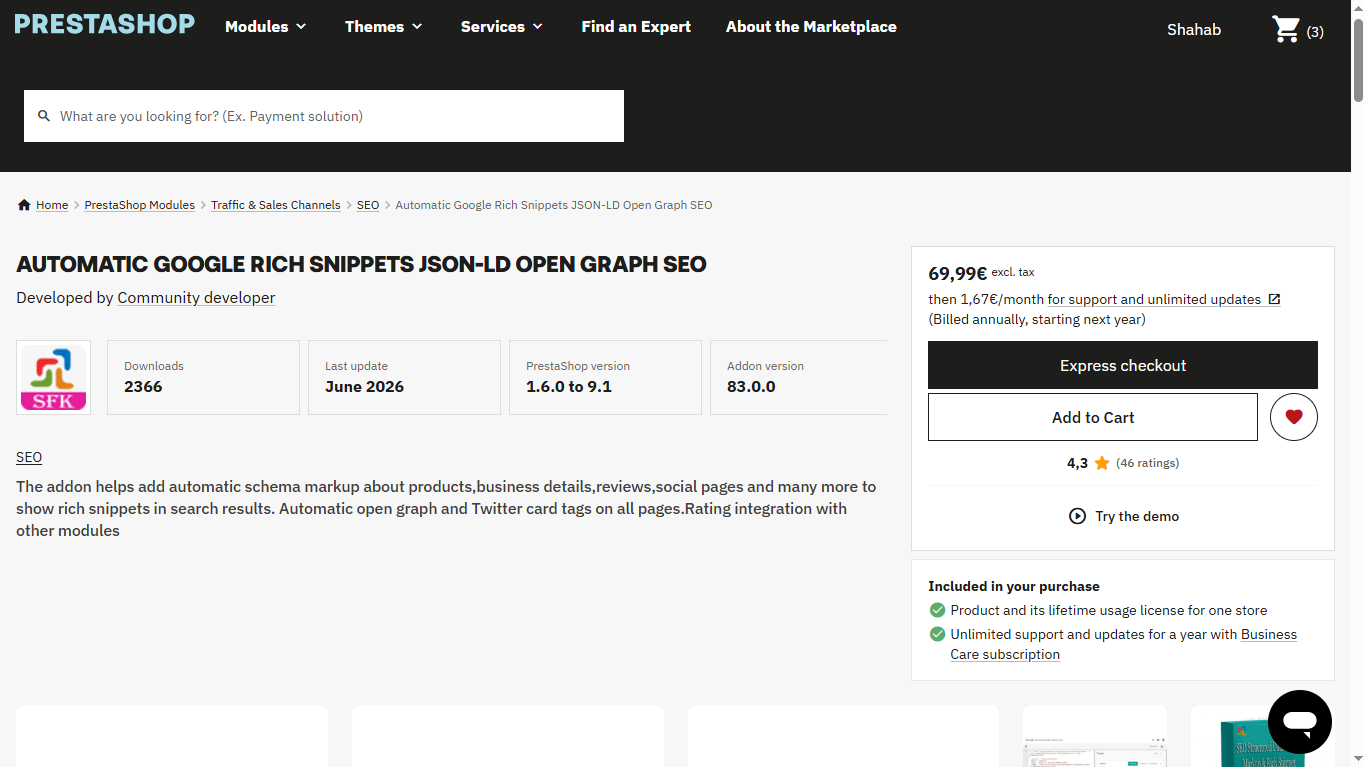
5. Modules and Extensions
Businesses can extend PrestaShop functionality through modules.
Depending on the requirements of a store, extensions can be used for areas such as:
- SEO
- Payment gateways
- Shipping
- Analytics
- Marketing
- Customer support
- Product feeds
- Social media
- Performance optimization
The official project also maintains a collection of third-party open-source modules and themes. (PrestaShop)
PrestaShop and SEO: How to Get Better Rankings
Simply installing PrestaShop does not guarantee Google rankings. A successful PrestaShop SEO strategy should combine technical SEO, content optimization, product optimization, and authority building.
Optimize Product Pages
Every important product page should have:
- A unique SEO title
- A compelling meta description
- A descriptive URL
- Original product descriptions
- Optimized product images
- Relevant internal links
- Appropriate structured data
- Clear product specifications
Avoid copying manufacturer descriptions across hundreds of products. Unique content can provide more value to users and create additional opportunities to rank for relevant searches.
Improve Category Pages
Category pages can target broader commercial keywords.
For example:
Poor:
/category123
Better:
/mens-running-shoes
A category page for “men’s running shoes” can include useful introductory content, relevant products, FAQs, internal links, and optimized headings.
PrestaShop 8 added the ability to include additional SEO text on category pages, along with improvements for discontinued products and pagination metadata. (PrestaShop)
Optimize Images
Images are extremely important for eCommerce websites.
Use descriptive filenames such as:
black-leather-wallet.jpg
instead of:
IMG00123.jpg
Also optimize image dimensions and file sizes to improve page speed.
PrestaShop 8 introduced WebP image support, while PrestaShop 9 expanded modern image format support with WebP and AVIF. (PrestaShop)
PrestaShop for Small and Large Businesses
PrestaShop can work for different types of online businesses, from small product catalogs to larger eCommerce operations.
Its flexibility is particularly useful when a business needs:
- Custom functionality
- Multiple languages
- Multiple stores
- International selling
- Custom payment integrations
- Advanced product catalogs
- Developer-level customization
The project describes PrestaShop as supporting localization for multiple countries and languages as well as major payment services. (PrestaShop)
PrestaShop 9: What’s New?
PrestaShop 9 introduced several important technical and SEO improvements.
Key changes include:
- Symfony 6.4 LTS
- PHP 8.1–8.4 support
- A new Admin API
- Hummingbird theme
- Cleaner URLs
- Improved SEO capabilities
- WebP and AVIF support
- Improved security
- Updated Back Office experience
- Easier upgrades through the Update Assistant (PrestaShop)
The PrestaShop project also reported that PrestaShop 9.1.5 was released in August 2026 with five security fixes and approximately 100 bug fixes. (PrestaShop Project)
For a production store, keeping the core platform, themes, and modules updated is an important part of security and maintenance.
PrestaShop vs Other eCommerce Platforms
The biggest difference between PrestaShop and many hosted platforms is the level of control.
With a hosted solution, much of the infrastructure is managed for you. With PrestaShop, businesses have greater control over the software, hosting environment, customization, and integrations.
This flexibility can be a major advantage for experienced developers and businesses with specific technical requirements.
However, that flexibility also means that hosting, backups, security updates, performance optimization, and technical maintenance need to be managed properly.
Best PrestaShop SEO Practices
For businesses trying to increase organic traffic, follow this checklist:
Technical SEO
- Use HTTPS
- Improve Core Web Vitals
- Create an XML sitemap
- Configure robots.txt correctly
- Fix broken links
- Avoid duplicate URLs
- Use canonical URLs
- Optimize crawlability
On-Page SEO
- Write unique product descriptions
- Optimize title tags
- Create useful meta descriptions
- Use descriptive URLs
- Structure headings properly
- Optimize images
- Add internal links
Content Marketing
- Create buying guides
- Publish product comparisons
- Write category guides
- Answer customer questions
- Create industry-related blog posts
- Build topical authority
Off-Page SEO
- Earn relevant backlinks
- Promote useful content
- Build brand mentions
- Develop partnerships
- Encourage genuine customer reviews
Is PrestaShop Good for SEO?
Yes. PrestaShop can provide a strong foundation for SEO, but rankings depend on how the website is configured and maintained.
A technically optimized PrestaShop website with fast hosting, clean architecture, useful content, optimized product pages, strong internal linking, and quality backlinks can compete effectively in organic search.
The platform provides many SEO capabilities, while the actual results depend on implementation and the competitiveness of the target keywords.
Conclusion
PrestaShop is a flexible open-source eCommerce platform for businesses that want control over their online stores. Its customizable architecture, product management capabilities, modules, themes, multilingual functionality, and improving SEO features make it suitable for a wide range of eCommerce businesses.
For businesses investing in organic search, PrestaShop can provide a solid technical foundation—but success requires more than installing the platform. Technical SEO, high-quality content, optimized product pages, fast performance, internal linking, and authoritative backlinks should all work together.
SEO Keywords to Use
Primary keyword:
- PrestaShop
Secondary keywords:
- PrestaShop eCommerce
- PrestaShop SEO
- PrestaShop development
- PrestaShop online store
- PrestaShop website
- PrestaShop features
- PrestaShop modules
- PrestaShop themes
- PrestaShop developer
- PrestaShop store
- PrestaShop platform
- PrestaShop optimization
Long-tail keywords:
- how to optimize PrestaShop for SEO
- best PrestaShop SEO practices
- how to create an online store with PrestaShop
- PrestaShop SEO optimization guide
- PrestaShop eCommerce development
- PrestaShop website development
- is PrestaShop good for SEO
- PrestaShop vs other eCommerce platforms
- how to improve PrestaShop website speed
- PrestaShop product page SEO