


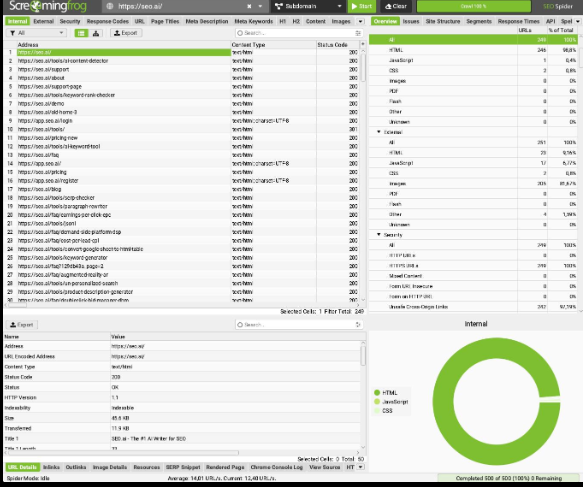


The SEO Spider Tool most people refer to is Screaming Frog SEO Spider, a desktop application that crawls websites the way search engines like Google do. It helps website owners, SEO professionals, and developers identify technical SEO issues that may affect search engine rankings.
What does an SEO Spider do?
It scans your website page by page and collects information such as:
- Broken links (404 errors)
- Redirect chains and loops
- Missing or duplicate page titles
- Missing or duplicate meta descriptions
- H1 and H2 heading issues
- Duplicate content
- Image sizes and missing ALT text
- Internal and external links
- Canonical tags
- XML sitemap validation
- Robots.txt analysis
- Page response codes (200, 301, 404, 500, etc.)
Why is it useful?
If you have a WordPress or PrestaShop website, an SEO Spider can help you:
- Find pages that Google cannot crawl
- Detect duplicate product pages
- Identify missing meta tags
- Improve internal linking
- Optimize images for faster loading
- Fix redirect problems
- Improve your site’s overall SEO health
Free vs. Paid Version
The free version of Screaming Frog lets you crawl up to 500 URLs, which is enough for many small websites.
The paid version includes additional features such as:
- Unlimited URL crawling
- JavaScript rendering
- Scheduling audits
- Integration with analytics and search console data
- Custom extraction
- Advanced reporting
Is it good for PrestaShop?
Yes. It’s especially useful for PrestaShop stores because it can help you identify:
- Duplicate product pages
- Missing product meta descriptions
- Broken product links
- Missing canonical tags
- Image optimization opportunities
- Pagination and category SEO issues
If you manage a large PrestaShop store, running a crawl regularly can help catch technical SEO problems before they affect your rankings.
You can learn more or download the software from Screaming Frog SEO Spider.
Since you’ve mentioned you’re working on PrestaShop SEO and JSON-LD, this is one of the best tools for auditing your store after making SEO or structured data changes.